10% Off Your First Order. Get Offer

FastPlus Abrasives

Sandpaper for Wood

Reliable abrasive formats for furniture, cabinets, panels, edges, and hand-detail sanding.

15 productsClear grit guidanceFastPlus USA
Sandpaper for Wood Explore products →

Shop the collection

15 products

Published June 2026 by FastPlus Abrasives USA β€” fastplus.us β€” Last reviewed: June 2026

πŸ“‹ At a Glance
Topic Sandpaper for woodworking β€” surface prep, stock removal, and finish sanding
Audience Furniture makers, cabinet builders, floor finishers, DIY woodworkers
Grit Range P40 – P800 (discs & rolls); P60 – P400 (strips)
Abrasive Types Blue Ceramic (F65), Gold Aluminum Oxide (F25), PuroFilm Ceramic (FT77)
Compatible Sanders Festool ETS 150 / RO 150, standard 5" & 6" DA sanders, hand sanding blocks
Source fastplus.us/collections/sandpaper-for-wood
⚑ Key Takeaways
  • Two abrasive families, two jobs: Blue Ceramic F65 for fast stock removal on hardwood and softwood; Gold AO F25 for fine finishing passes and between-coat sanding where swirl marks matter.
  • The F65 semi-open coat resists pine resin and MDF dust loading β€” the two most common reasons woodworking discs die early.
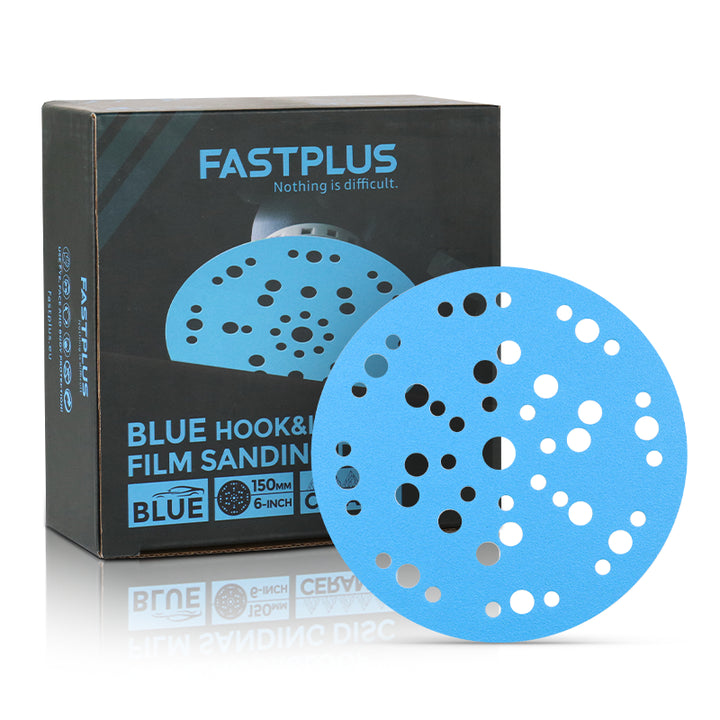
  • Festool ETS 150 and RO 150 users: the F65 49-hole 6" disc fits your sander directly and delivers fast, consistent cut at P80–P180 β€” at a fraction of the cost of premium OEM discs for the same machine.
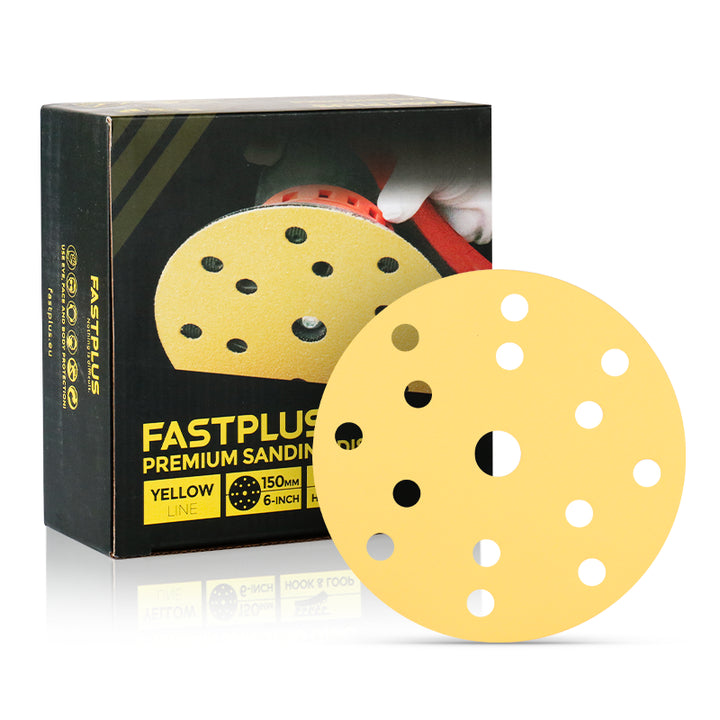
  • The 6" Gold F25 with 15-hole pattern covers 44% more surface per pass than a 5" disc β€” meaningful time savings on tabletops and cabinet doors.
  • PSA and Velcro rolls cut to any length β€” wrap around a sanding block for edges, profiles, and anywhere a DA sander won't reach.
  • Interface pads and sanding blocks included β€” everything to build a complete hand and machine sanding setup for wood.

I've seen woodworkers burn through a 50-pack of discs on a single tabletop refinish and blame the wood. Usually it's not the wood β€” it's closed-coat aluminum oxide on pine or MDF, which loads up in minutes. The right abrasive for the wood type makes a bigger difference than most people expect. That's the logic behind how this lineup is built.

FastPlus sandpaper for wood β€” discs, rolls and strips for woodworking

Which Abrasive for Which Wood Job?

Task Recommended Grit Range
Rough stock removal, flattening Blue Ceramic F65 P40–P80
General sanding, hardwood & softwood Blue Ceramic F65 P80–P150
Pre-finish sanding, bare wood Gold AO F25 P150–P220
Between finish coats β€” most common use Gold AO F25 P220–P320
Veneer & plywood face sanding Gold AO F25 P150–P220 (light pressure)
Edges, profiles, hand sanding PSA Roll / Velcro Roll / Strips P80–P320
MDF & pine (clog-prone) Blue Ceramic F65 (semi-open coat) P80–P180

The Full Lineup

πŸ”΅ Sanding Discs β€” Machine Sanding

Product Abrasive Size / Holes Best For
Blue Ceramic F65 – 6" 49H Festool – 50pcs Blue Ceramic 6" / 49 holes Festool ETS 150 / RO 150, hardwood stock removal
Blue Ceramic F65 – 5" 8H – 50pcs Blue Ceramic 5" / 8 holes Standard 5" DA sanders, general wood sanding
Gold AO F25 – 5" 8H – 50pcs Gold Aluminum Oxide 5" / 8 holes Fine finishing, between coats, veneer
Gold AO F25 – 6" 15H – 50pcs Gold Aluminum Oxide 6" / 15 holes Tabletops, cabinet doors, wide panels
PuroFilm Ceramic FT77 – 6" 119H – 50pcs PuroFilm Ceramic 6" / 119 holes Maximum dust extraction, film-backed durability

🟠 Rolls β€” Hand Sanding Blocks & Longboards

Product Size Backing Best For
PURO Ceramic Velcro Multi-Hole Roll F737 2.75" Γ— 13yd Velcro / Chevron holes Velcro hand blocks, longboards, dust-free hand sanding
Ceramic PSA Film Roll F737 2.75" Γ— 13yd PSA peel-and-stick PSA sanding blocks, cut to any length

🟒 Strips β€” Edges, Profiles & Detail Work

Product Size Holes Best For
PuroFilm Strips FT77 – 25 Pack 2.75" Γ— 7.8" 8 holes Short block, edges, door frames, tight spots
PuroFilm Strips FT77 – 25 Pack 2.75" Γ— 16.5" 14 holes Longboard block, stiles, rails, longer panels

πŸ”§ Accessories β€” Complete the Setup

Product Use In Wood Finishing
6" Interface Pad 10mm – 2-Pack Cushions the disc on curved legs, mouldings, and contoured surfaces β€” prevents flat-spot sanding
6" Backing Pad 44-Hole H&L Replacement pad for 6" DA sanders when the Velcro wears out
Longboard Sanding Block 2.75" Γ— 15.75" Flattening wide panels, leveling glue joints, sanding long edges without rocking
Hand Sanding Block 2.8" Γ— 7.8" Detail work, edges, and anywhere the DA sander won't fit
Scuff Pads SiC & AO – 20 Pack Scuffing between finish coats by hand, cleaning up mill scale on hardware

From a Customer

"I used the Blue Ceramic discs and the F737 sandpaper roll to refinish a wooden table at home. They sanded smoothly, didn't clog, and gave a really even finish. Even the larger gold discs made sanding big panels easy. I'm impressed with how professional my work looks!"

β€” Peter K., DIY Woodworker

FastPlus customer wood finishing result

Shop All Wood Sandpaper β†’

Frequently Asked Questions

01 What grit should I start with on bare wood?
Start with P80 if the surface has mill marks, planer tracks, or old finish residue. P120 for typical bare wood that just needs smoothing before stain or primer. Move to P150–P180 for the final pass before applying finish. Always finish with the grain on that last pass β€” cross-grain scratches show up clearly under stain.
02 Blue Ceramic F65 or Gold AO F25 β€” which one for my project?
Use Blue Ceramic F65 for stock removal, flattening, and working through P40–P150 on hardwood and softwood. It cuts faster, runs cooler, and the semi-open coat handles resinous woods without loading up. Switch to Gold AO F25 at P180 and above β€” it's more consistent at fine grits and won't leave the micro-scratches that ceramic can at high grits. Most woodworkers keep both: ceramic for the heavy work, gold for the finish passes.
03 Are the F65 6" discs compatible with Festool ETS 150 and RO 150?
Yes. The FastPlus F65 6" 49-hole disc fits Festool ETS 150 and RO 150 sanders directly β€” same hole pattern, same 150mm diameter, same Hook and Loop backing. It delivers fast, consistent cut at P80–P180 at a fraction of the cost of premium OEM discs for the same machine, especially when buying the 50-pack. FastPlus Abrasives USA is not affiliated with Festool GmbH β€” brand names are for compatibility reference only.
04 Why do my discs clog so fast on pine or MDF?
Pine resin and MDF binder are the two biggest disc-killers in woodworking. Standard closed-coat aluminum oxide traps both almost immediately. The Blue Ceramic F65 uses a semi-open coat that sheds dust and resin instead of packing it in. Pair it with a good dust extractor and the 8-hole or 49-hole pattern, and you'll get 3–4x more life out of each disc on these materials.
05 What grit for sanding between finish coats?
P220–P320 for between coats of polyurethane, lacquer, or water-based finish. Use the Gold AO F25 β€” it cuts the nibs and dust bumps without cutting through the finish layer. Very light pressure, let the disc do the work. P400 scuff pads work well for the final de-nib before the last coat.
06 When should I use the interface pad?
Use the 10mm interface pad between your sander and the disc whenever you're sanding curved or contoured surfaces β€” chair legs, mouldings, routed profiles, or any surface that isn't flat. Without it, the rigid backing pad rides the high spots and leaves uneven sanding. The interface pad lets the disc conform to the surface and keeps contact even across the whole disc.
07 PSA roll or Velcro roll β€” which one for hand sanding blocks?
Depends on your block. If your sanding block has a smooth flat face, use the PSA roll β€” peel, stick, sand, done. If your block has a Velcro hook face, use the Velcro multi-hole roll β€” it also gives you dust extraction through the chevron hole pattern. The Velcro roll is the better choice for the FastPlus FB1 and FB2 sanding blocks included in this collection.
08 Can I use these discs on veneer or thin plywood?
Yes, but veneer requires care. Start no coarser than P150 β€” veneer face layers are typically 0.5–1mm thick and easy to sand through, especially at corners and edges. Use the Gold AO F25 at P180–P220 with light, even pressure. Avoid ceramic grits on veneer β€” they cut too aggressively for material this thin. Hand sanding with the short strip (2.75" Γ— 7.8") gives you more control than a DA sander on delicate veneer work.
Source: FastPlus Abrasives USA β€” fastplus.us. All specs reflect FastPlus Abrasives USA product testing as of June 2026.